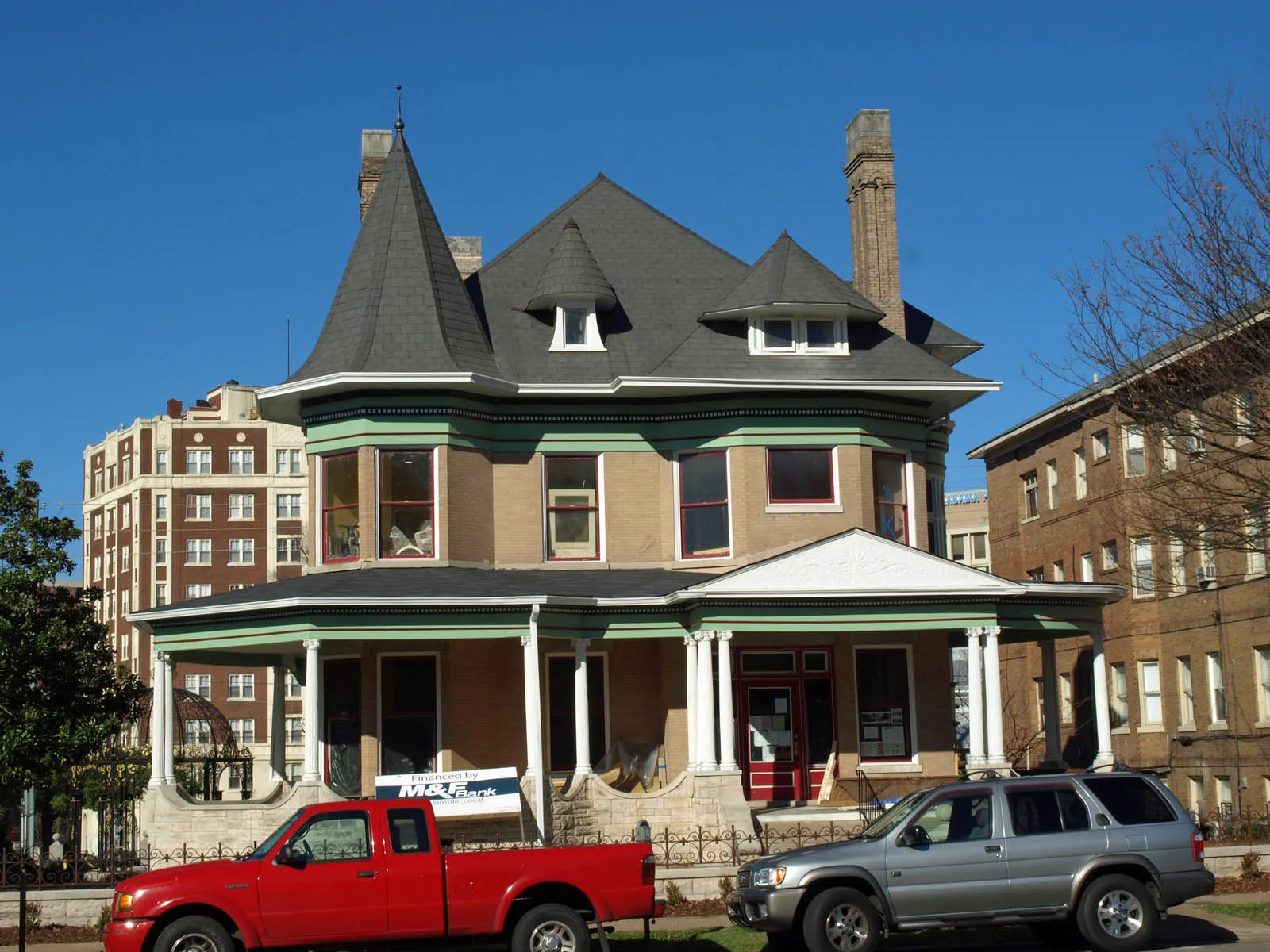

Alabama’s homestead exemptions can cut the property tax on your home, or wipe it out. Every owner-occupant gets a basic exemption. Owners who are 65 or older, permanently and totally disabled, or blind get much bigger ones, and some pay no property tax at all on their home [1].
At a glance
- What counts as a homestead
- Owner-occupied single-family home and up to 160 acres [1]
- Basic exemption (H-1)
- $4,000 state and $2,000 county assessed value [1]
- 65+, income $12,000 or less (H-3)
- Exempt from all property tax on the home [1]
- Permanently and totally disabled
- Exempt from all property tax on the home, no income limit [1]
- When to apply
- By December 31, based on October 1 status [2]
What counts as a homestead
A homestead is a single-family, owner-occupied home and the land under it, up to 160 acres. You must own it and live in it as your primary residence on the first day of the tax year [1][5]. Counties look at whether you lived there on October 1 [2].
Exemptions work on assessed value, not market value. Homes are assessed at 10% of value, as Class III property [3]. So a $4,000 exemption removes $4,000 of assessed value, which is $40,000 of market value.
The four types
| Type | Who qualifies | State tax | County tax |
|---|---|---|---|
| H-1 | Under 65, not disabled | $4,000 of assessed value off | $2,000 of assessed value off |
| H-2 | 65+ with state adjusted gross income of $12,000 or less, or retired due to permanent and total disability | Fully exempt | $5,000 of assessed value off, including school tax |
| H-3 | 65+ with $12,000 or less taxable income on the federal return, or permanently and totally disabled at any age | Fully exempt | Fully exempt |
| H-4 | 65+ with income over $12,000 | Fully exempt | $2,000 of assessed value off |
H-1: the basic exemption
Any owner-occupant under 65 who isn’t disabled gets $4,000 off the assessed value for state tax and $2,000 for county tax. There’s no income limit [1]. Counties, cities and other taxing authorities may grant up to $4,000 [1].
Owners 65 and older
Every homeowner 65 or older is exempt from the state portion of property tax on the homestead [1]. The county exemption depends on income [1]:
- H-3: taxable income of $12,000 or less on your most recent combined federal return: exempt from all property taxes on the home.
- H-2: state adjusted gross income of $12,000 or less: a $5,000 county exemption, which includes school taxes.
- H-4: income above that: the regular $2,000 county exemption.
Baldwin County says to count taxpayer and spouse together for the H-2 income test [2].
Disabled and blind owners
Owners who are permanently and totally disabled, at any age, are exempt from all property taxes on the homestead, with no income limit [1]. You may need a physician’s affidavit (Form PT-PA-1) [1].
Blind owners of any age are exempt from the state portion, and get up to $5,000 off the county assessment [1].
Deadlines and how to apply
Apply at your county office: the revenue commissioner, tax assessor or property tax office, depending on the county [1].
Baldwin County’s rules show how it works [2]:
- You must live in the home on October 1 of the year you claim.
- File the regular homestead exemption once, before December 31 of the year you buy.
- Senior and disability exemptions (H-2, H-3 and disability) must be validated each year by signature. The county mails a form to sign and return.
- If your income drops below $12,000 after you’ve claimed H-4, sign again for the new category.
Bring an Alabama driver’s license. For a disability exemption, bring two medical documents that describe the disability and the month and year it began, or your original Social Security or VA award letter [2]. Other counties may ask for different documents, so call ahead.
Current use for farm and forest land
Current use valuation lowers the taxable value of qualifying agricultural and forest land, and certain historic buildings and sites, by valuing them on their current use instead of market value [3]. The Department of Revenue sets the values each year by soil productivity, in separate tables for row crops, pasture and timber [4].
To get it [3]:
- Apply with the county assessing official between October 1 and January 1. Describe the property and how it’s used; for forest land, aerial photos may be required.
- For parcels of five acres or less, the assessor may ask for more, like a forest management plan.
- Once approved, you don’t reapply each year. A new owner has to apply again in the next window, or the land goes back to market value.
If the land is converted to a use that doesn’t qualify, the assessor revalues it at market value, and rollback taxes come due for up to the three prior tax years, based on the sales price or market value, whichever is higher [3][4].
Where to get help
- County revenue commissioner or tax assessor: applications, forms and deadlines.
- Alabama Department of Revenue, Property Tax Division: general rules on homestead and current use [1][3].
Sources
Common questions
What is the homestead exemption in Alabama?
A reduction in property tax on a single-family home you own and live in as your primary residence, plus up to 160 acres. The basic exemption (H-1) takes $4,000 of assessed value off the state tax and $2,000 off the county tax. Owners 65 and older, and disabled or blind owners, get larger exemptions.
Do seniors pay property taxes in Alabama?
Owners 65 and older don't pay the state portion of property tax on their homestead. If their taxable income on the federal return is $12,000 or less, they're exempt from all property taxes on it (H-3). If their state adjusted gross income is $12,000 or less, they also get a $5,000 county exemption (H-2). Above the income limit, they get the regular $2,000 county exemption (H-4).
When is the deadline to apply for homestead exemption in Alabama?
Apply with your county by December 31, based on whether you own and live in the home on October 1. For example, Baldwin County says a regular homestead exemption is filed once, before December 31 of the year you buy, while the senior and disability exemptions are re-signed each year.